Трос из нержавеющей стали 1 × 7. Знакомство с продуктом Обзор: Трос из нержавеющей стали 1×7 — это высококачественный, прочный и универсальный канат, изготовленный из одной пряди из семи отдельн...
Подробнее

304 and 316 stainless steel wire rope differ mainly in molybdenum content: 316 adds 2-3% molybdenum, giving it much stronger resistance to chloride pitting in marine and chemical environments, while 304 offers nearly the same strength at a lower cost for general indoor and outdoor use. Choosing between them comes down to environment, budget, and how critical corrosion resistance is to the application's service life.
Both 304 and 316 stainless steel wire rope are austenitic alloys built around an 18% chromium, 8% nickel base, which is what gives stainless wire rope its passive oxide layer and general corrosion resistance. The difference that matters most is molybdenum: 316 contains roughly 2-3% molybdenum, while 304 contains none. That single alloying addition is why 316 resists pitting and crevice corrosion in chloride-rich environments so much better than 304 - molybdenum stabilizes the passive film against chloride ions that would otherwise attack it locally.
In terms of mechanical performance, 304 and 316 wire rope are close enough that most buyers do not need to choose based on strength alone. Both grades are typically manufactured to comparable tensile strength classes under standards such as ASTM A492 (stainless steel wire rope) and reference specifications like DIN EN 12385 or GB/T 9944 for construction and testing. Where they diverge is service environment: 304 performs well in ordinary atmospheric, indoor, and light-outdoor conditions - decking, general rigging, agricultural fencing - where it delivers strong value per dollar. 316 is the better choice near seawater, in coastal construction, on boats, in swimming pool areas, and in chemical or food-processing plants where chloride exposure is constant.
A quick field check that buyers sometimes overlook: 304 stainless wire rope is weakly magnetic (it can show slight magnetic attraction, especially after cold working during wire drawing), while 316 is effectively non-magnetic due to its different microstructure. This is not a reliable substitute for mill certification, but it is a useful rule of thumb when sorting inventory. On cost, 316 typically runs 20-30% higher than 304 for the same construction and diameter, a premium that is easy to justify in marine or chloride-heavy settings but often unnecessary for general-purpose use.
Two numbers matter when specifying stainless steel wire rope: minimum breaking strength (the load at which the rope is rated to fail in testing) and working load limit, or WLL (the maximum load the rope should carry in service). WLL is not a fixed fraction printed on a chart - it is calculated by dividing minimum breaking strength by a design safety factor, and the correct factor depends on the application and applicable code.
For general rigging and material handling, a 5:1 safety factor is a common baseline referenced in ANSI/ASME B30 series guidance, meaning a rope rated to break at 5,000 lbs would carry a 1,000 lb working load. Overhead lifting, personnel-adjacent rigging, and life-safety applications often require higher factors (commonly 8:1 to 10:1 or more), and OSHA-regulated workplaces should always confirm the factor required for the specific equipment and task rather than assuming 5:1 is sufficient. The basic formula is: WLL = Minimum Breaking Strength / Safety Factor.
Breaking strength for stainless wire rope scales with diameter and construction (more wires and strands generally trade some strength for flexibility), and it varies by manufacturer, wire tensile grade, and lay type. Because published "typical" tables online are frequently inconsistent between suppliers, the reliable way to specify a project is to request the mill test certificate and construction-specific breaking strength for the exact diameter, construction, and grade being purchased - Kailong provides this documentation with production runs so buyers are working from actual tested figures rather than generic estimates.
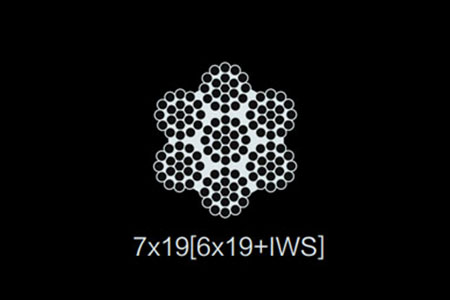
Wire rope construction is described by strand count and wires per strand, and the choice changes both flexibility and strength. 1x19 (one strand, nineteen wires) is a stiff, low-stretch construction favored for static tensioning applications such as cable railing infill, balustrades, and architectural tension structures, where rigidity and a clean sightline matter more than flexibility. 7x7 (seven strands of seven wires) offers more flexibility while remaining relatively strong, making it a common general-purpose choice for light rigging, control cables, and smaller architectural runs. 7x19 (seven strands of nineteen wires) is the most flexible of the three and is the standard choice for running over sheaves and pulleys - hoisting systems, theatrical and stage rigging, and marine running rigging all rely on this construction because it tolerates repeated bending without fatiguing quickly.
A related but distinct product is aircraft cable, which is often built in the same 1x19 or 7x19 constructions but manufactured to aerospace specifications (such as MIL-DIN-83420 or similar) with tighter tolerances and dedicated testing. For most industrial, construction, and marine buyers, standard 304/316 wire rope built to ASTM/DIN/GB references is the appropriate and more cost-effective choice; aircraft-cable-grade product is generally reserved for applications explicitly requiring aviation certification.
Nylon or plastic coating is a common option layered over bare stainless wire rope, most often on 7x7 or 7x19 constructions. The coating adds abrasion resistance, protects railings and hands from wire snags, and provides a color option for aesthetic applications like decking and fencing - Kailong supplies plastic-coated stainless wire rope in the same construction range for these uses. Typical end markets for stainless wire rope across these constructions include cable railing and balustrades, marine rigging and lifelines, stage and event rigging, bridge and structural reinforcement, and general industrial lifting and material handling.
Proper end termination is what determines whether a wire rope assembly performs to its rated strength. Swaged (pressed) sleeves are the most common termination method for stainless wire rope: the sleeve is compressed onto the rope with a hydraulic or hand swaging tool to form a permanent, high-strength connection, and undersized or oversized swages are a leading cause of premature failure, so matching sleeve size to rope diameter precisely matters. When cutting stainless wire rope, an abrasive cut-off wheel or dedicated wire rope cutter produces a clean end; the cut point should be taped, welded, or otherwise seized before cutting to prevent the strands from unraveling ("bird-caging") once tension is released. Kailong offers custom cut-to-length service with sealed, burr-free ends so buyers receive rope ready for termination rather than needing to rework raw stock.
Welding stainless steel wire rope is possible but requires care: heat from welding can cause chromium carbides to precipitate at grain boundaries near the heat-affected zone, a condition known as sensitization, which locally depletes the chromium available to maintain the passive layer and reduces corrosion resistance right at the weld. Where welding is unavoidable, low-carbon grades (such as 316L) and post-weld passivation treatment help mitigate this effect; mechanical termination methods (swaging, clamps, thimbles) are generally preferred over welding for load-bearing rope ends.
Routine maintenance for stainless wire rope is lighter than for galvanized rope but not zero: periodic rinsing removes salt and chemical residue in coastal or industrial environments, and a light application of a stainless-compatible lubricant on running rigging (rope that moves over sheaves) reduces internal wire wear. Galvanized wire rope is cheaper upfront but its zinc coating sacrifices itself to protect the steel underneath and depletes over time, requiring more frequent inspection and eventual replacement in corrosive settings - stainless rope's passive oxide layer is self-renewing as long as it isn't mechanically damaged or starved of oxygen, which is why coastal and chemical-exposure projects usually see a lower total maintenance cost with stainless despite the higher purchase price.
In the US market, general-purpose stainless wire rope in common diameters is readily available through industrial distributors such as McMaster-Carr and Grainger, and specialty rigging suppliers such as E-Rigging, which is convenient for small quantities and fast turnaround. For project-level or recurring volume - custom constructions, non-standard diameters, coated rope, or cut-to-length runs with mill certification - sourcing directly from a manufacturer such as Kailong typically offers better unit pricing and the flexibility to specify grade, construction, and finish exactly, with OEM/ODM production for buyers building their own product lines.
Cost-effectiveness should be evaluated over the life of the installation, not just the purchase price. 304 wire rope costs less per foot but may need earlier replacement in marine or chemical-exposure settings; 316 costs more upfront but its corrosion resistance can extend service life significantly in those same environments, lowering the effective cost per year of service. Compared against galvanized steel wire rope, which has the lowest initial cost of the three, stainless rope (304 or 316) generally wins on lifecycle cost wherever moisture, salt, or chemical exposure is a factor, since galvanized rope's protective coating is finite and its replacement cycle is typically shorter in those conditions.
Matching grade, construction, and diameter to the actual demands of a project - rather than defaulting to whichever spec is easiest to find online - is what keeps a wire rope installation safe and cost-effective over its full service life. Kailong manufactures 304, 316, and 316L stainless steel wire rope across 1x7, 1x19, 1x37, 7x7, 7x19, 6x19, 6x37, and related constructions, in diameters from 1mm to 50mm, with custom cut-to-length and plastic-coated options available. For project quotes, technical selection support, or OEM/ODM production, contact the Kailong sales team directly.
What are the key differences between 304 and 316 stainless steel wire rope?
The main difference is molybdenum content: 316 contains 2-3% molybdenum that 304 lacks, giving 316 significantly better resistance to chloride pitting and crevice corrosion, particularly in marine and chemical environments. Mechanical strength is similar between the two grades for comparable constructions.
Is 316 stainless steel wire rope always better for marine environments?
316 is the stronger choice for sustained saltwater or high-chloride exposure because of its molybdenum content, but 304 can still be adequate for marine-adjacent applications with lower or intermittent salt exposure, and it costs less. For direct, continuous seawater contact, 316 is the standard recommendation.
How do I calculate the working load limit for stainless steel wire rope?
Divide the rope's minimum breaking strength by an appropriate safety factor: WLL = Minimum Breaking Strength / Safety Factor. General rigging commonly uses a 5:1 factor, while overhead lifting and life-safety applications typically require 8:1 or higher under ANSI/ASME B30 and OSHA guidance - always confirm the required factor for your specific application.
What construction (1x19, 7x7, 7x19) should I choose for a balustrade?
1x19 is the typical choice for balustrades and cable railing infill because its rigid, low-stretch construction keeps the cable taut and visually clean under tension. 7x7 or 7x19 are used where more flexibility is needed, such as rope that bends around fittings or moves.
Can I weld stainless steel wire rope without losing corrosion resistance?
Welding heat can cause chromium carbide precipitation near the weld (sensitization), which locally reduces corrosion resistance. Low-carbon grades like 316L and post-weld passivation reduce this risk, but mechanical terminations such as swaging are generally preferred for load-bearing rope ends.
Where can I buy custom cut-to-length stainless steel wire rope online?
Standard diameters are available from distributors like McMaster-Carr, Grainger, and E-Rigging for small orders. For custom constructions, coatings, or cut-to-length runs with mill certification and project-level pricing, manufacturers such as Kailong (steelwirerope-china.com) offer direct OEM/ODM sourcing.
How does stainless steel wire rope compare to galvanized steel in cost and durability?
Galvanized wire rope costs less upfront, but its zinc coating is a sacrificial layer that depletes over time and needs earlier replacement in wet or corrosive conditions. Stainless wire rope (304 or 316) costs more initially but its passive oxide layer self-renews, generally giving it a lower total lifecycle cost in moisture-, salt-, or chemical-exposed environments.
JiangSu Kailong Stainless Steel Products Co., Ltd.
TEL: +86-15161050666
MAIL: sales@steelwirerope-china.com
ADD: Dongbei Industrial Park, Dainan Town, Xinghua County, Taizhou City, Jiangsu Province, China.

Трос из нержавеющей стали 1 × 7. Знакомство с продуктом Обзор: Трос из нержавеющей стали 1×7 — это высококачественный, прочный и универсальный канат, изготовленный из одной пряди из семи отдельн...
Подробнее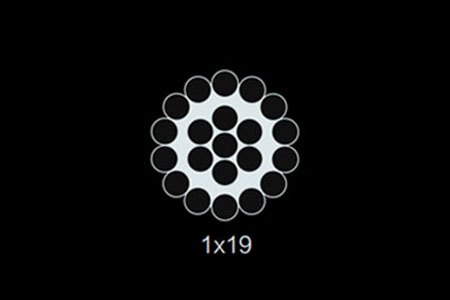
Трос из нержавеющей стали 1 × 19. Знакомство с продуктом Обзор: Трос из нержавеющей стали 1×19 представляет собой прочный и высокопрочный канат, изготовленный из одной пряди из 19 отдельных пров...
Подробнее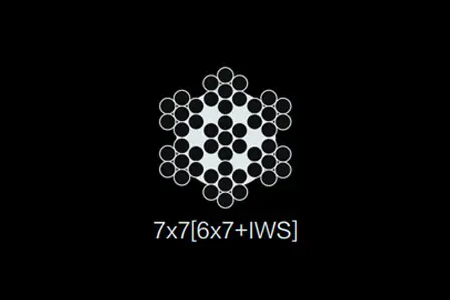
Трос из нержавеющей стали 7 × 7. Знакомство с продуктом Обзор: Трос из нержавеющей стали 7×7 — это универсальный, прочный и гибкий канат, состоящий из семи прядей, каждая из которых содержит семь отде...
Подробнее
7X19 [6x19 IWS] Трос из нержавеющей стали. Знакомство с продукцией Обзор: Трос из нержавеющей стали 7X19 [6x19 IWS] представляет собой высокопроизводительный трос, предназначенный для применений...
Подробнее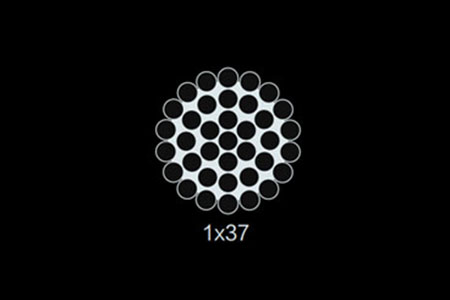
Трос из нержавеющей стали 1 × 37. Знакомство с продуктом Обзор: Трос из нержавеющей стали 1×37 представляет собой высокопрочный и долговечный канат, изготовленный из одной пряди из 37 отдельных ...
Подробнее
Трос из нержавеющей стали 6 × 7 FC. Знакомство с продуктом Обзор: Трос 6×7 FC из нержавеющей стали — это высококачественный канат, предназначенный для применений, требующих как прочности, так и гибкос...
Подробнее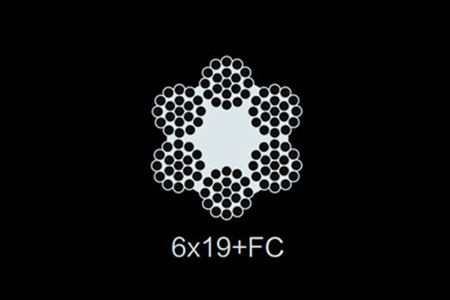
Трос из нержавеющей стали 6 × 19 FC. Знакомство с продуктом Обзор: Трос из нержавеющей стали 6×19 FC — это высокопроизводительный универсальный канат, обеспечивающий исключительную прочность, ги...
Подробнее
Трос из нержавеющей стали 19 × 7. Знакомство с продуктом Обзор: Трос из нержавеющей стали 19×7 — это высокопроизводительный трос, предназначенный для широкого спектра применений, требующих как п...
Подробнее
Трос из нержавеющей стали 7 × 37. Знакомство с продуктом Обзор: Трос из нержавеющей стали 7×37 представляет собой высокопрочный, гибкий и долговечный канат, состоящий из 7 прядей, каждая из кото...
Подробнее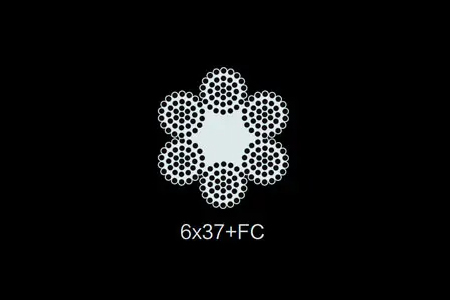
Трос из нержавеющей стали 6 × 37 FC. Знакомство с продуктом Обзор: Трос из нержавеющей стали 6×37 FC представляет собой высокопроизводительный многопрядный канат, предназначенный для применений, требу...
Подробнее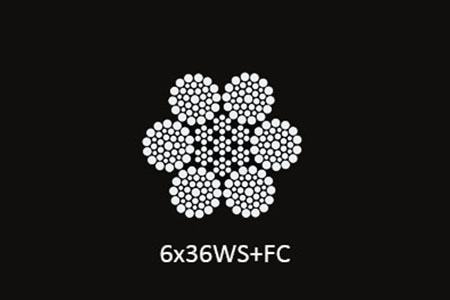
Трос из нержавеющей стали 6 × 36 WS FC. Знакомство с продуктом Обзор: Трос из нержавеющей стали 6×36 WS FC — это высококачественный канат для тяжелых условий эксплуатации, предназначенный для пр...
Подробнее
Черный трос из нержавеющей стали 7 × 7 (процесс травления фосфорной кислотой) Знакомство с продуктом Обзор: Черный трос из нержавеющей стали 7×7 (процесс травления фосфорной кислотой) — это высо...
Подробнее




 сканирование WeChat